Expert adult eye misalignment correction
Adult Strabismus Surgery in Los Angeles
Living with misaligned eyes can affect your confidence, depth perception, and daily activities. Adult strabismus surgery is a safe, effective procedure that can restore eye alignment and eliminate double vision. Dr. Ghiam is a fellowship-trained strabismus surgeon in Los Angeles with expertise in complex adult cases.
What is Strabismus (Eye Misalignment)?
Strabismus is a condition in which the eyes are not properly aligned — one eye may turn inward (esotropia), outward (exotropia), upward (hypertropia), or downward (hypotropia). While commonly thought of as a childhood condition, strabismus also affects adults. It can develop from previous childhood strabismus that recurs, from neurological conditions such as cranial nerve palsies or myasthenia gravis, after trauma, from thyroid eye disease, or from age-related changes in the eye muscles. Adult strabismus surgery is a functional medical procedure — not cosmetic — that realigns the eyes by adjusting the position and strength of the eye muscles.
Symptoms of Strabismus (Eye Misalignment)
- Visible misalignment of the eyes — one eye turns in, out, up, or down
- Double vision (diplopia) that may be constant or intermittent
- Difficulty with depth perception and spatial awareness
- Eye fatigue and strain, especially with reading or screen use
- Head tilting or turning to compensate for misalignment
- Social self-consciousness about eye appearance
- Difficulty making eye contact
Common Causes of Strabismus (Eye Misalignment)
- Childhood strabismus that recurs or was never fully corrected
- Cranial nerve palsies (third, fourth, or sixth nerve)
- Thyroid eye disease (Graves' orbitopathy)
- Myasthenia gravis
- Prior eye surgery (retinal detachment repair, cataract surgery)
- Stroke or brain injury
- Age-related decompensation of a long-standing phoria
- Orbital fracture or trauma
How We Evaluate Strabismus (Eye Misalignment)
A comprehensive strabismus evaluation includes measurement of the degree and direction of misalignment in multiple gaze positions using prism and cover testing. We assess the full range of eye movements, evaluate for underlying neurological causes, and perform sensory testing to determine if binocular vision can be restored. In some cases, imaging of the eye muscles (CT or MRI of the orbits) may be needed, particularly if restrictive or neurogenic causes are suspected.
Treatment Options
For larger or symptomatic misalignments, surgery is the definitive treatment. Strabismus surgery involves adjusting the position of one or more eye muscles to realign the eyes. The procedure is performed under general anesthesia as an outpatient surgery, with most patients returning to normal activities within one to two weeks. Dr. Ghiam often uses adjustable suture techniques, allowing fine-tuning of alignment in the recovery period for optimal results.
- Prism glasses to compensate for small misalignments
- Strabismus surgery — adjusting eye muscles to realign the eyes
- Adjustable suture technique for fine-tuned postoperative alignment
- Botulinum toxin (Botox) injection in select cases
- Treatment of the underlying cause (thyroid disease, myasthenia, etc.)
- Vision therapy in select cases
Strabismus Surgery Results
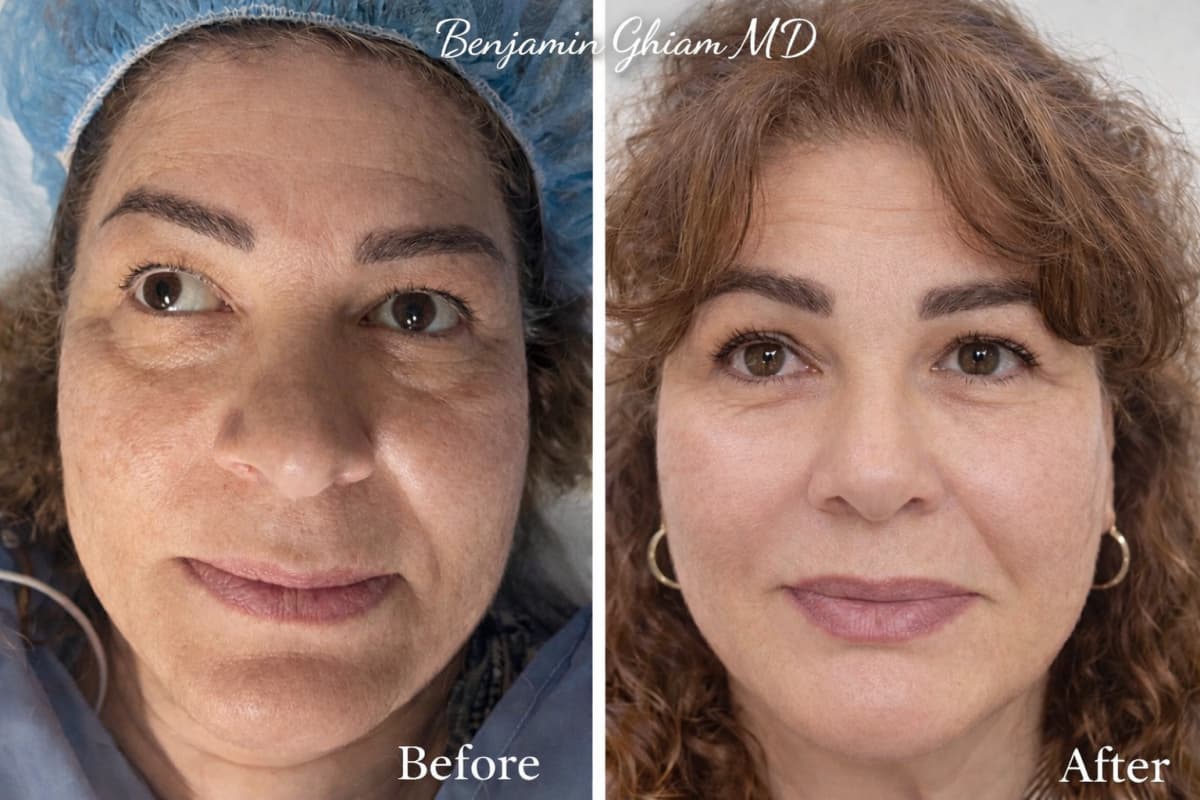
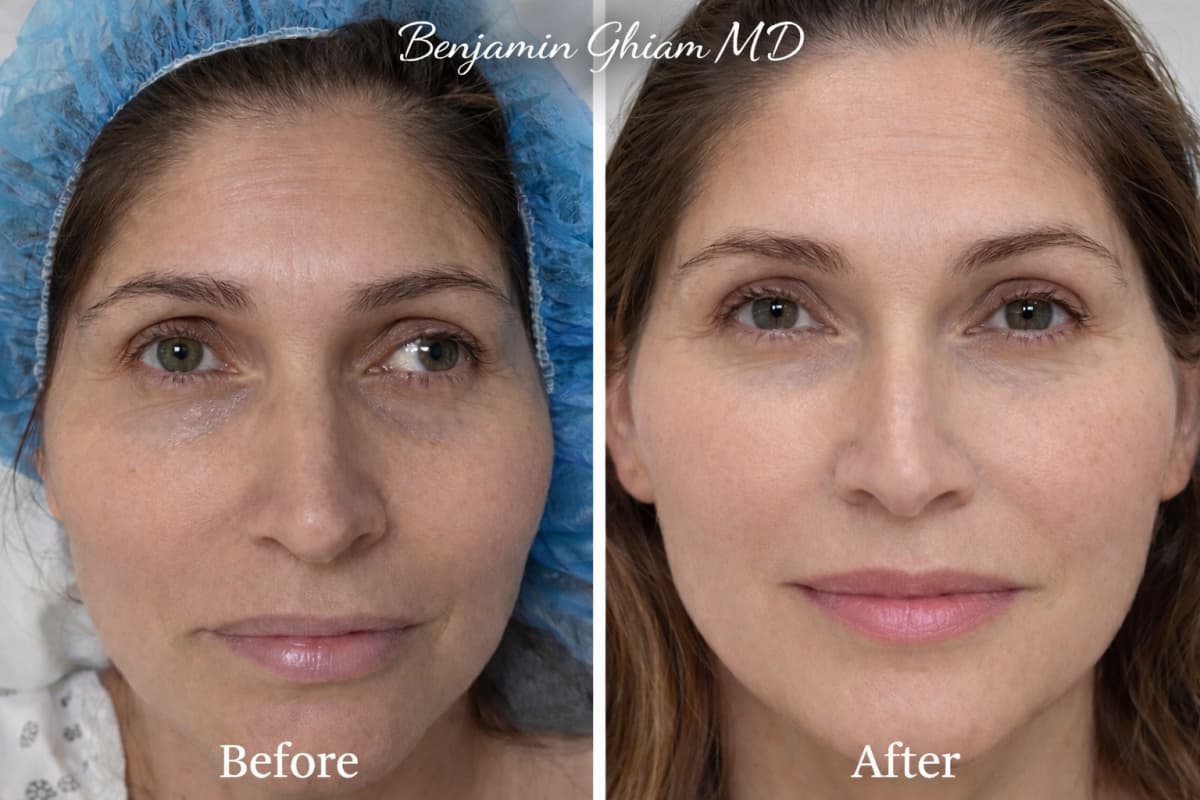
Before and after photographs demonstrating eye realignment following adult strabismus surgery performed by Dr. Ghiam.
Why Choose Dr. Ghiam for Strabismus (Eye Misalignment)
- Fellowship-trained in both neuro-ophthalmology and adult strabismus surgery
- Expertise in complex cases — neurogenic, restrictive, and reoperation strabismus
- Adjustable suture technique for precision outcomes
- Understanding of underlying neurological causes (cranial nerve palsies, myasthenia gravis, thyroid eye disease)
- Comprehensive pre- and post-operative care
Dr. Ghiam has specialized fellowship training in both neuro-ophthalmology and adult strabismus surgery. This dual expertise is particularly valuable for patients whose strabismus has a neurological cause — such as cranial nerve palsies, myasthenia gravis, or thyroid eye disease — where understanding the underlying condition is essential to planning the right surgical approach.
Get Expert Help for Strabismus (Eye Misalignment)
If you are experiencing eye misalignment or double vision, strabismus surgery may be the right solution. Contact our Los Angeles office to schedule a consultation with Dr. Ghiam.